


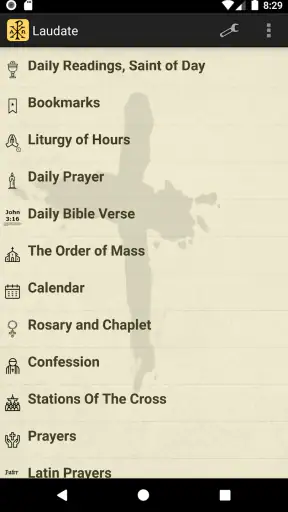
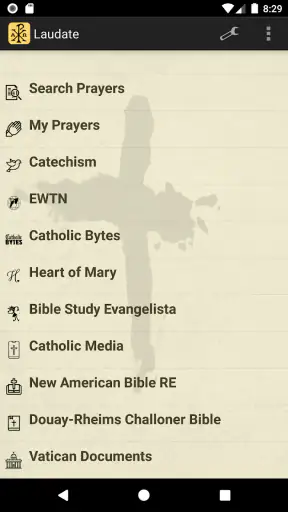
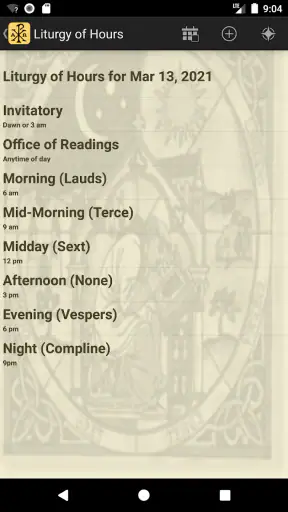
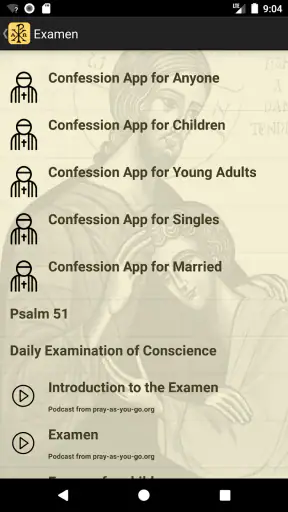
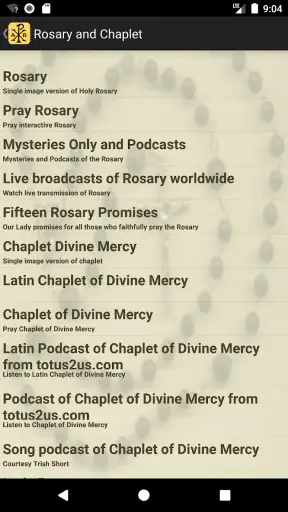

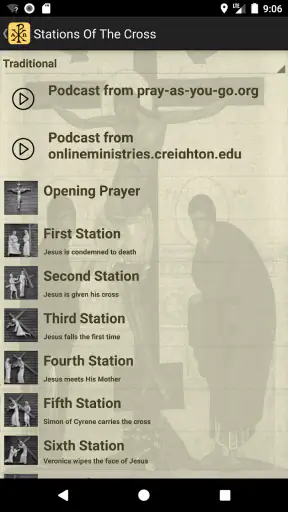
Laudate is the kind of Catholic app I can imagine keeping on my phone for years, not because it tries to do everything in a flashy way, but because it brings several useful parts of daily religious practice into one place. I found daily readings, prayers, podcasts, and rosaries arranged as practical tools rather than as a single feed that I would quickly forget. For anyone who wants a dependable reference during the day, that combination is its main appeal.
It is a free Books & Reference app from Aycka Soft, available for Everyone and currently at version 2.91. It has been around since Jun 12, 2010, which gives it a more established feel than many newer devotional apps. Its average rating is 4.7 from around 31 thousand ratings, and it has passed 1 million installs. Those figures do not replace personal experience, but they do match my impression that Laudate has become a familiar companion for a large Catholic audience.
How I use Laudate in an ordinary day
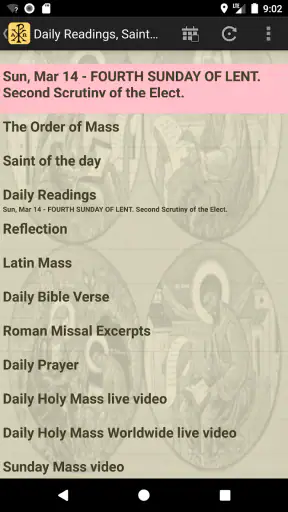
My most useful starting point is the daily reading area. Instead of opening the app and wandering through every available section, I go directly to the reading for the day, read it slowly, and then use the prayer material when I want to continue. That simple sequence makes the app feel less like a large digital library and more like a repeatable morning routine.
A realistic example would be a busy weekday when I have only a few quiet minutes before leaving home. I can read the daily passage, pause to reflect, and listen to a related audio item later when I am not looking at the screen. In the evening, the rosary section gives me a different way to return to prayer without having to search through unrelated material. The value is not that every session becomes long; it is that the next step is usually close at hand.
I also like the difference between reading and listening. Daily readings suit a quiet desk or a commute when I can concentrate on text, while podcasts are more convenient when my phone is in my pocket. The rosaries add a more guided option for users who prefer a structured prayer rather than choosing individual prayers one by one. This variety helps Laudate serve different moments without requiring several separate apps.
The app is especially useful for someone who is beginning to build a regular Catholic routine. A newcomer may not know which prayer to choose or where to find a particular devotion. Having readings, prayers, rosaries, and podcasts together reduces that initial friction. I would still recommend taking time to learn the layout instead of assuming the first screen shows everything important.
For experienced users, the advantage is different. The content itself may be familiar, but the app reduces the number of steps between intention and action. When I already know that I want the daily reading or a rosary, I do not need to open a browser, compare search results, or move between several services. The strongest feature is the repeatable path from opening the app to beginning a practice.
Choosing a starting point instead of browsing aimlessly
Laudate contains enough material that casual browsing can become its own distraction. My advice is to choose one anchor for the day: the daily reading in the morning, a prayer during a break, a podcast while travelling, or a rosary in the evening. Once that habit is stable, the other sections become useful extensions rather than a long list of options competing for attention.
This approach also makes it easier to judge whether the app fits you. If you want a focused reading tool with almost no extra material, Laudate may feel broader than necessary. If you appreciate having several forms of Catholic devotion nearby, its breadth is precisely what makes it practical. I would not treat the large collection as a reason to consume more; I would treat it as a reason to choose more deliberately.
Settings and small choices worth checking
Before settling into a routine, I would spend a little time looking through the app’s available preferences and navigation options. The most important adjustment is not a decorative one. It is making sure the sections I use most often are easy for me to reach, because a devotional app becomes much more useful when it supports a familiar sequence instead of making me rediscover the same path every day.
I also pay attention to how I handle audio. Podcasts and spoken prayer can be valuable, but they change the way I use the phone. I prefer to choose an episode or prayer before starting a walk or household task, rather than searching while moving. This is a small habit, yet it keeps the listening experience calm and avoids turning prayer time into constant screen interaction.
Text size and reading comfort deserve attention too. A screen that looks fine for a quick glance may become tiring during a longer reading. I would test the daily readings at the time of day when I normally use them, especially if I read in low light or on a smaller phone. A comfortable display makes it easier to stay with the passage instead of rushing because the layout feels cramped.
Because Laudate combines several content types, I find it helpful to decide which areas should be part of my normal routine and which should remain occasional. Daily readings might be a fixed habit, while podcasts could be reserved for travel and rosaries for a particular time of day. This division prevents the app from becoming an endless catalogue and gives each section a clear purpose.
The minimum operating system is Android 6.0, so users with a compatible older device may still be able to use it without moving to a newer phone. That is useful for people who keep a dedicated device for reading or audio. On the other hand, anyone expecting the newest design conventions may notice that a long-established app can feel more functional than polished. I value clarity over novelty here, but your preference may differ.
Making the phone less distracting
One practical improvement is to prepare the environment around the app rather than relying on the app alone. I silence unrelated notifications, place the phone where I can read without reaching for other apps, and decide in advance whether the session will be text, audio, or prayer. These steps are not special Laudate features, but they make its combined library work much better in real life.
I would also avoid opening it with an unrealistic plan. If I tell myself I will explore every prayer, listen to several podcasts, and complete a long reading session, I am more likely to postpone opening it. Choosing one modest action makes the app easier to return to tomorrow. Over time, consistency matters more than trying to use every part immediately.
Faster patterns for regular users
Once I know which sections matter to me, I use a simple three-part pattern: read, listen, and pray. The daily reading gives the session a clear beginning. A podcast can provide a longer follow-up when I have time away from the screen. The rosary or another prayer then gives the day a structured close. I do not use all three every day, but keeping the pattern in mind helps me choose quickly.
Another useful pattern is to match the format to the situation. Text works best when I have attention and a stable place to sit. Audio works better during a walk or a routine task that does not require concentration. A guided rosary is more suitable when I want the app to provide structure rather than making several decisions myself. This sounds obvious, but it prevents the common mistake of forcing one format into every part of the day.
I also recommend using the app in short return visits rather than one large session. A morning reading, a brief prayer at midday, and audio in the evening can feel more natural than waiting for a single uninterrupted block of time. Laudate’s range is well suited to this rhythm because its sections support different kinds of attention.
For families, the Everyone age rating makes the app approachable as a shared reference, but I would still guide younger users through the first few sessions. The important lesson is not simply where a button is; it is how to choose content respectfully and avoid treating a large collection as entertainment to scroll through. A parent or teacher can use the app as a starting point for conversation rather than handing over the phone without context.
For someone returning to Catholic practice after a long break, I would begin with the daily readings and one familiar prayer. The app can feel less intimidating when the first goal is orientation, not completion. After that, podcasts may help provide background or reflection, while rosaries offer a concrete practice. The order matters because starting with too many unfamiliar options can make a useful resource feel demanding.
When another tool may be better
Laudate is not automatically the best choice for every reader. If your priority is academic Bible study, detailed cross-referencing, or extensive note-taking, a dedicated scripture or study app will probably be more suitable. If you only want a minimalist prayer timer, the breadth of Laudate may be unnecessary. And if your main interest is audio discovery, a general podcast app may offer a more specialized listening experience.
Where Laudate wins is convenience across several Catholic uses. I would rather open one familiar app for a reading, a prayer, a rosary, or a podcast than maintain separate tools for each task. The trade-off is that a broad app may not go as deeply into one function as a specialist app. That is not a flaw so much as the central decision: choose integration if you want a shared home for daily practice, or choose a specialist when depth in one area matters more.
Advanced limits and realistic expectations
The app’s range can create a sense of abundance, but abundance is not the same as perfect organization for every person. I sometimes have to slow down and decide what I am actually looking for. Users who prefer a highly personalized dashboard may find the experience less tailored than a modern service built around individual recommendations.
I would also keep expectations sensible about the role of a phone in prayer. Laudate can provide the text, audio, and structure, but it cannot create attention or reflection for me. If I open it while constantly switching to messages, the app’s usefulness drops sharply. Its best results come when I treat it as a tool that supports a habit, not as a substitute for forming one.
Audio introduces its own limitations. Listening is convenient, but it is not always the right choice when I need to study a passage closely or return to a particular line. For careful reading, I switch back to text and give myself time to pause. The ability to choose between formats is helpful, but the formats should not be treated as interchangeable.
There is also a difference between having access to many prayers and knowing which one suits a particular moment. A large collection can help someone who is searching, but it can overwhelm someone who wants a single prescribed path. My solution is to keep a small personal routine and explore only when there is a genuine reason. That gives the app room to grow with me without allowing it to dictate every session.
The long history of Laudate is both a strength and a consideration. Its established identity may reassure users who want a durable Catholic reference, while people drawn to the newest interface trends may find it less exciting. I would choose it for the usefulness of its combined material, not for visual novelty. The current version, 2.91, feels most valuable when I use it as a dependable reference rather than as a constantly changing social platform.
Privacy-conscious users should make their own decision based on the permissions and device behavior they are comfortable with, as they should with any app. My practical advice is to install it, review the available system prompts carefully, and then judge whether the experience fits your personal boundaries. The free price makes trying it straightforward, but “free” should not mean skipping that basic check.
My verdict after building a routine around it
Laudate works best when I give it a job. As a daily reading companion, it is convenient. As a prayer reference, it is broad enough for both newcomers and regular users. As an audio and rosary tool, it helps move devotional practice beyond silent scrolling. The combination is more important than any single section because it lets me adapt the app to the time and attention I actually have.
I would recommend it to Catholics who want one free place for daily readings, prayers, podcasts, and rosaries, especially if moving between separate apps has become annoying. It is also a sensible option for someone rebuilding a routine and looking for several entry points without paying for a collection of individual tools. The Everyone rating and support for Android 6.0 make it approachable for a wide range of users.
I would hesitate to recommend it to someone seeking an extremely minimal interface, advanced scholarly study features, or a deeply personalized system of reminders and notes. In those cases, a focused alternative may be a better fit. Laudate’s strength is not specialization; it is the practical connection between several Catholic resources in one established app.
My best advice is to start small: open the daily reading, choose one prayer or rosary that feels meaningful, and reserve podcasts for a moment when listening genuinely helps. After a week, adjust the routine around your real schedule rather than an ideal one. Used that way, Laudate becomes less like a catalogue and more like a quiet reference I can return to whenever I need it.
That is why I see it as a worthwhile download for the right reader. It does not remove the need for personal discipline, and its broad structure will not satisfy everyone. But when I combine a clear starting point, a few deliberate settings, and repeatable habits, it provides a useful Catholic companion without charging for access. For daily practice, that balance makes it easy to recommend.


